

Today, we’d like to introduce you to…

- Name and role within the company
My name is José Luis Gomariz, and I am the CEO of NasApp. As CEO, I oversee the company’s overall direction, defining its strategy, driving project development, and ensuring that our technology addresses real market needs. I also work on building strategic partnerships, managing relationships with clients and institutions, and positioning NasApp as a valuable technological solution for environmental management and odour impact reduction.

- Brief description of the company and its activities
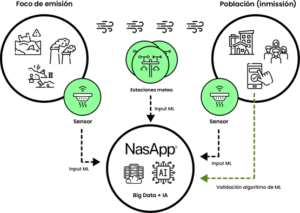
NasApp is a technology company specialized in the intelligent management of odour impact. We develop a multi-layer digital platform that integrates different sources of environmental information, including structured citizen reports, sensor data, meteorological information, and analysis and prediction models based on artificial intelligence.
Within the waste management and circular economy sectors, our activity is particularly focused on facilities such as waste treatment plants, landfills, composting plants, waste recovery facilities, and other operations where odour emissions may affect relationships with the surrounding community. NasApp enables users to visualize, correlate, and analyze all this information within a single platform, combining environmental and operational data with citizen perception at the point of impact. This allows companies to better understand what is happening, anticipate critical events, identify patterns, and make more informed operational decisions.
- Current Challenges and Needs
Directive (EU) 2024/1785, which amends the European framework on industrial emissions, explicitly includes odours within the concept of pollution and reinforces the need to address them as part of the environmental management of industrial activities. This regulatory change represents a significant challenge for sectors such as waste management, but also for technology companies like NasApp: the goal is to transform an issue that has traditionally been difficult to measure, interpret, and manage into objective, traceable, and actionable information for decision-making.
The main challenge is that odour episodes do not depend on a single factor. They are influenced by the operational processes of each facility, meteorological conditions, atmospheric dispersion, environmental sensor data, the location of potential emission sources, and the actual perception of the population affected by the impact. Therefore, having isolated data is not enough; it is essential to integrate, correlate, and transform this information into actionable knowledge.
In this context, NasApp’s challenge is to evolve odour management towards a more preventive, traceable, and business-oriented model. This involves integrating not only external environmental data but also information from each facility’s own operations, enabling a better understanding of odour events, the anticipation of risk situations, and the transformation of data into concrete management decisions.
- Motivation for Joining the Cluster and the Type of Synergies Sought
What motivated us to join CREC was the opportunity to become even more closely connected to the waste management and circular economy sector, an area where odour management is particularly complex and requires solutions tailored to the specific realities of each facility.
For NasApp, it is important to develop technology not only from an external or theoretical perspective, but also through a deep understanding of how the sector actually operates: how facilities function, which processes may generate odour episodes, which internal data are relevant, how decisions are made, and what constraints companies face in their day-to-day activities.
For this reason, the synergies we seek with CREC members are strongly linked to shared learning, technological validation, and the development of practical solutions. We want to collaborate with companies and organizations that can help us better understand the operational complexity of the sector, so that our platform can integrate not only external environmental data but also information specific to each facility, transforming it into actionable knowledge for more preventive, traceable, and effective odour management.
Thank you for being part of CREC!
