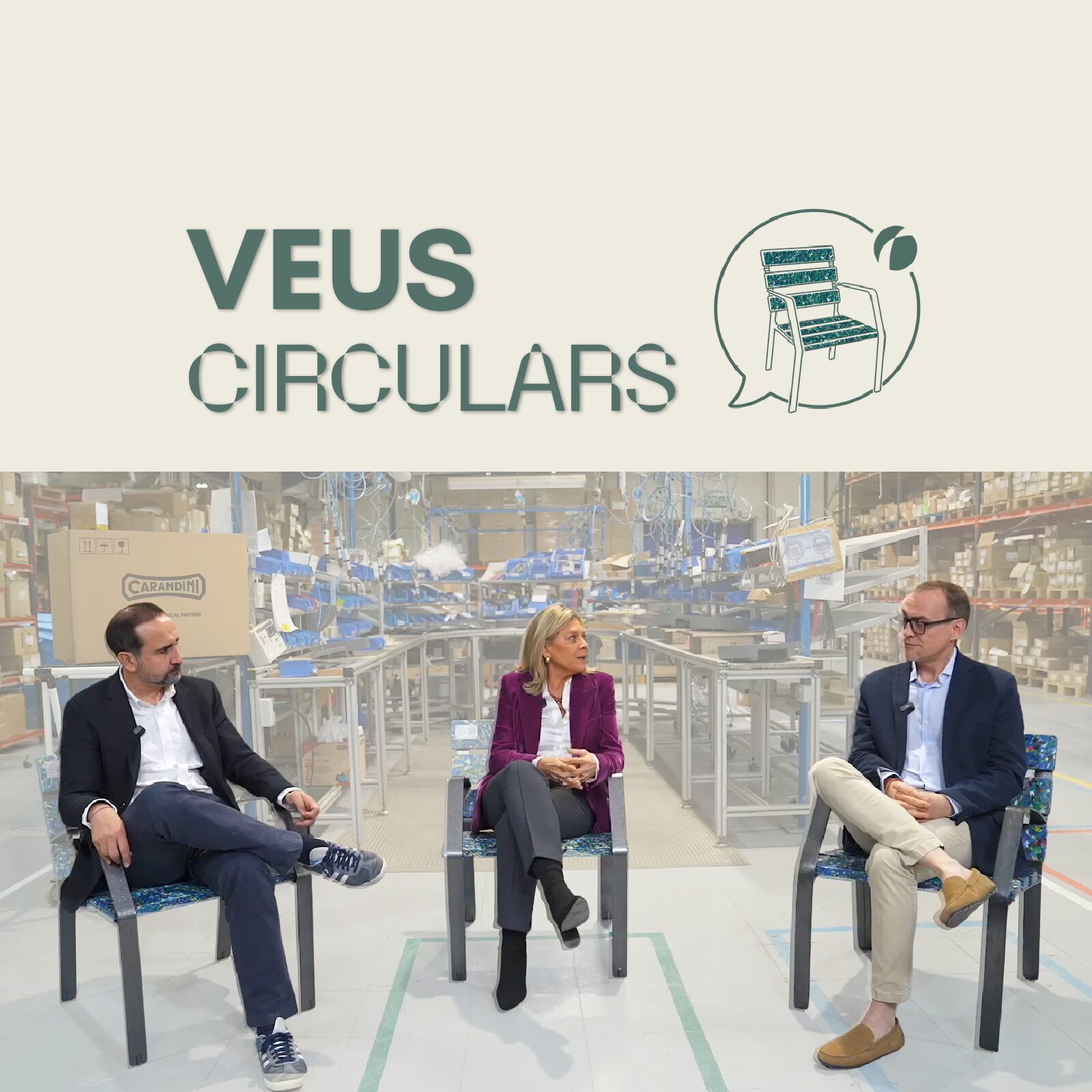
How can a lighting fixture be designed to be easier to recycle at the end of its life? This is the central question explored in the third episode of Veus Circulars, the audiovisual series promoted by the Waste Cluster of Catalonia (CREC) to showcase projects that demonstrate how collaboration between the different actors across the value chain drives the circular economy.
In this episode, Carandini, Fundación ECOLUM and Urbaser Electronics share their experience in a project that places eco-design at the heart of lighting fixture development. Collaboration between the manufacturer, the Producer Responsibility Organisation (PRO) and the waste management company has made it possible to integrate recyclability criteria from the earliest design stages, facilitating the disassembly of lighting fixtures, the separation of their different materials and their subsequent recovery at the end of their service life.
Throughout the conversation, the participants explain how working together from the very beginning of the process makes it possible to anticipate the product’s end of life and make design decisions that improve material recovery, optimise traceability and increase the efficiency of the recycling system. This approach highlights that design decisions have a direct impact on the circularity of products and their ability to generate new resources.
The project also highlights the fundamental role of Extended Producer Responsibility (EPR) and the importance of manufacturers, Producer Responsibility Organisations (PROs) and waste management companies sharing information and expertise to develop more sustainable solutions. This collaboration not only improves the recyclability of lighting fixtures, but also creates new opportunities for innovation and promotes more efficient and circular production models.
This third episode of Veus Circulars demonstrates that circularity is not only about waste management, but also about design, planning and cooperation between all the stakeholders involved throughout a product’s life cycle.
From CREC, we would like to thank Carandini, Fundación ECOLUM and Urbaser Electronics, as well as everyone who participated in this project, for their commitment and willingness to share an initiative that demonstrates that collaboration is the most effective way to advance towards a more circular economy.