
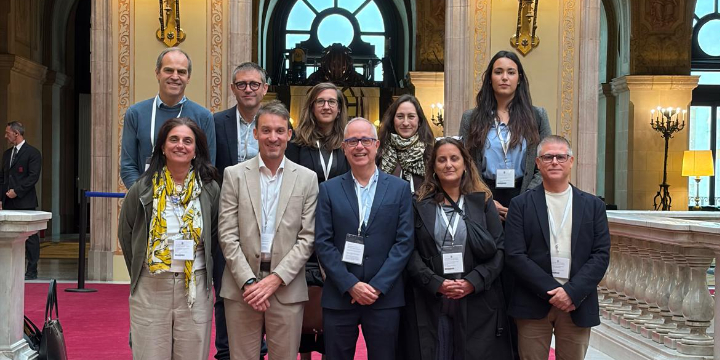
The Parliament of Catalonia has approved, by a broad majority and with no votes against, a motion urging the Government to allocate €7 million in 2027 to support Catalan industrial clusters. The clusters are calling for this funding to be made available during the first half of 2027, ensuring that resources can be deployed efficiently and strengthening their capacity to act. The aim is to expand innovation, industrial transformation and business collaboration projects that help improve the competitiveness of Catalonia’s productive sector.
The parliamentary agreement represents an important step towards consolidating a cluster policy that Catalonia pioneered more than three decades ago. Increased public funding would help establish a stronger and more stable support framework, in line with leading European industrial regions such as the Basque Country and Flanders, where clusters play a prominent role in policies promoting competitiveness, innovation and economic transformation.
Clusters: a key element in strengthening the role of industry in Catalonia
The approval of the motion reflects broad agreement on the need to strengthen the role of industry in the Catalan economy. A strong, competitive and innovative industrial sector is essential to generating high value-added economic activity, creating skilled jobs, consolidating production value chains and ensuring Catalonia’s ability to compete internationally.
In this context, clusters are a strategic tool for turning this shared objective into concrete projects. Their ability to connect businesses, technology centres, universities and other ecosystem stakeholders makes it easier to identify common challenges and develop collaborative initiatives that would be difficult to undertake individually. This role is particularly relevant for small and medium-sized enterprises (SMEs), which form the backbone of Catalonia’s productive sector.
Currently, the 28 clusters accredited by ACCIÓ bring together more than 3,200 companies and associated organisations and account for 36% of Catalonia’s industrial turnover, according to data from the agency itself. These figures highlight the scale and capacity of an ecosystem that helps drive innovation, business transformation and competitiveness across numerous value chains in the Catalan economy.
The clusters have welcomed the broad parliamentary support for this initiative, which recognises the importance of providing these organisations with adequate and stable resources so they can continue their work and expand their impact on businesses.
“This motion recognises that clusters are essential to improving business competitiveness. Collaboration allows us to accelerate innovation, advance industrial transformation and create new opportunities across the region. The important thing now is for this institutional support to translate into stable resources and, in the future, to be complemented by stronger support schemes for collaborative business projects, generating an even greater impact on the Catalan economy,” says Eloi Montcada, Cluster Manager at INNOVI – Catalan Wine Cluster.
Additional resources for clusters would make it possible to strengthen their activities in strategic areas such as identifying new business opportunities, collaborative innovation, internationalisation, talent acquisition and development, digital transformation, the adoption of artificial intelligence and the integration of sustainability criteria into production processes.
Beyond supporting the organisations themselves, the aim is to multiply opportunities for collaboration between businesses and help turn industrial challenges into new projects, investments and higher value-added activities. Ultimately, strengthening clusters means strengthening the ability of Catalan companies to innovate, grow and tackle major future challenges together.
What is a cluster?
A cluster is a group of companies and knowledge-based organisations that share a business area, value chain or strategic field and work together to improve their competitiveness.
Clusters bring together companies that may compete with one another but also share common challenges and opportunities. Through specialised cluster management organisations, they promote joint projects involving innovation, new business development, internationalisation, training and business transformation.
This approach makes it possible to build collaborative economies, facilitate access to knowledge and accelerate changes that would be more difficult to achieve individually, particularly for SMEs. Clusters therefore act as a meeting point between companies’ real needs and public instruments designed to support competitiveness.
The Government of Catalonia’s cluster policy
Catalonia is a pioneer in cluster policy, with a track record dating back to 1992. Today, this policy is mainly implemented through the Catalunya Clústers Programme, promoted by the Government of Catalonia through ACCIÓ.
Established in 2014, the programme aims to strengthen business competitiveness, particularly among SMEs, through collaborative work, strategic analysis and the development of transformative projects.
Cluster policy is based on the idea that business competitiveness depends not only on individual capabilities, but also on the quality of the environment in which companies operate, their relationships with other businesses and their ability to access knowledge, talent and new opportunities.
In this respect, clusters are a public-private collaboration tool that connects industrial policy with companies’ strategic challenges and directs activities towards tangible results in transformation and competitiveness.
The 28 clusters accredited under the Catalunya Clústers Programme
The 28 clusters accredited by ACCIÓ represent a wide range of economic activities and strategic value chains in Catalonia, from manufacturing to advanced technologies and services linked to productive activity.
The network comprises the following organisations:
- AMBIT: Living Spaces Cluster
- Barcelona Clúster Nàutic
- Beauty Cluster
- Catalan Water Partnership
- Catalonia Health
- CBC – Catalan Bioenergy Cluster
- CEEC – Catalan Energy Efficiency Cluster
- CICAT – Catalan Lighting Cluster
- Catalan Audiovisual Cluster
- Light Mobility Cluster
- Catalonia Digital Cluster
- Food Retail Cluster of Catalonia
- CREC – Waste Cluster of Catalonia
- CSIM – Real Estate Services Cluster
- EDUTECH – Educational Technology Cluster
- FEMAC – Agricultural Machinery and Production Equipment Cluster of Catalonia
- Foodservice Cluster
- INDESCAT – Catalan Sports Cluster
- IN-MOVE by Railgrup
- INNOVACC – Catalan Meat and Alternative Protein Cluster
- INNOVI – Catalan Wine Cluster
- KID’S CLUSTER
- Leather Cluster Barcelona
- MAV – Advanced Materials Cluster of Catalonia
- MODACC – Catalan Fashion Cluster
- Packaging Cluster
- Tech Tourism Cluster
- We Mind Cluster – Mental Health, Neuroscience and Longevity
