
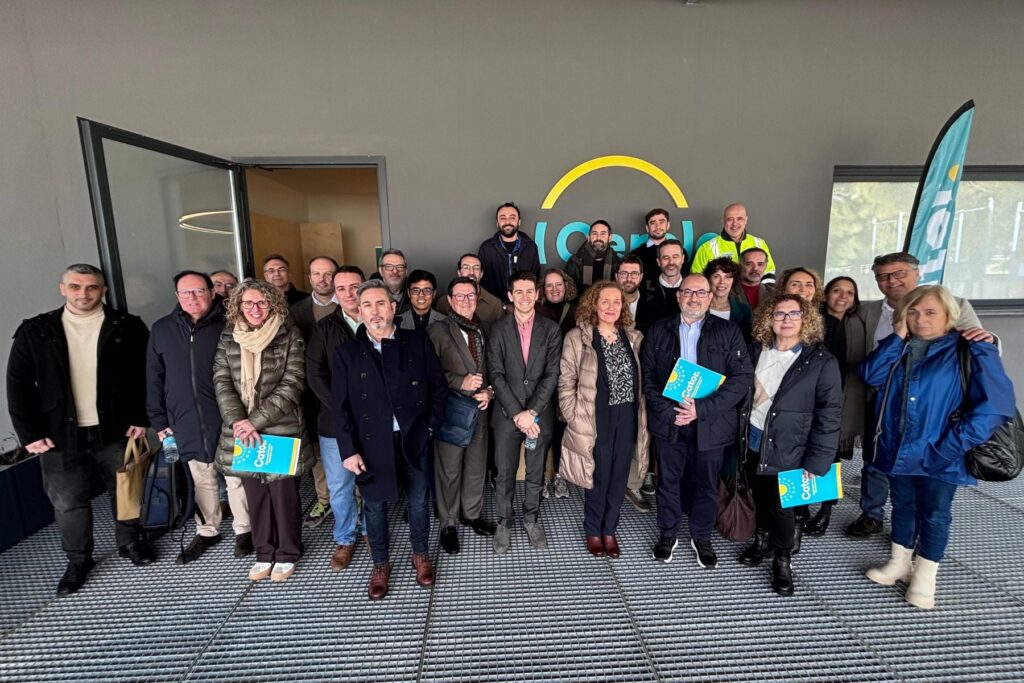
On February 4, at Cercle de Cator in Alcover (Tarragona), we organized, in collaboration with CATOR, LEITAT, and BROSETA, the workshop “Sustainable Lubricants: Innovation, Circularity and the Future”, a space for discussion and reflection aimed at driving the lubricants sector towards more responsible and efficient models.
A Shared Challenge: Regulatory Transformation and Opportunities for the Sector
The transition of the lubricants sector is not just a trend—it is a necessity. During the workshop, participants discussed the key regulatory changes that will shape the coming years and directly impact companies across the sector. These regulations place increasing emphasis on traceability, responsibility throughout the value chain, and the principles of the circular economy.
As CREC – Waste Cluster of Catalonia, we opened the session by highlighting that transformation accelerates when there is coordination, knowledge sharing, and a common vision among the different stakeholders in the value chain. The cluster serves as a tool to bring technological and regulatory trends closer to businesses, helping them anticipate change and turn it into competitive opportunities.
Circularity and Re-Refined Base Oils: An Industrial Opportunity
One of the key topics of discussion was the role of re-refined base oils and industrial oil recycling as strategies for circularity. The regeneration of used oils reduces dependence on fossil-based raw materials and closes the resource loop, making it possible to produce lubricants with the same level of performance while significantly reducing environmental impact.
The incorporation of re-refined base oils is not only an increasingly important regulatory requirement but also an opportunity for companies to improve efficiency and add environmental value to their products.
Sustainability Based on Technical Criteria and Objective Data
Sustainability is not an empty label. During the workshop, the importance of supporting progress with verifiable technical criteria and objective data was highlighted, including:
- Carbon footprint assessments to measure and compare environmental impacts.
- Recognized certifications (such as the EU Ecolabel) that guarantee strict criteria regarding performance, toxicity, and biodegradability.
- Performance testing to ensure that sustainable lubricants meet not only environmental standards but also expectations for efficiency and durability.
These tools help build market confidence and enable manufacturers to objectively demonstrate the benefits of their products.
The Future of the Sector: Innovation, Collaboration and Action
The workshop clearly showed that the future of lubricants is circular and innovative. However, this future will only be possible:
- Through strong collaboration between industrial stakeholders, technology providers, and public administrations.
- If companies integrate sustainability as a strategic element rather than simply a regulatory requirement.
- By leveraging digitalization and traceability tools to strengthen trust and transparency in the market.
At CREC, we reaffirm our commitment to continue supporting the sector by fostering collaborative working spaces, facilitating access to technical and regulatory information, and connecting value chains to accelerate the transition towards more responsible and sustainable industrial models.

More information about the workshop at cator-sa.com.
