
Today, we introduce…

- Name and role in the company
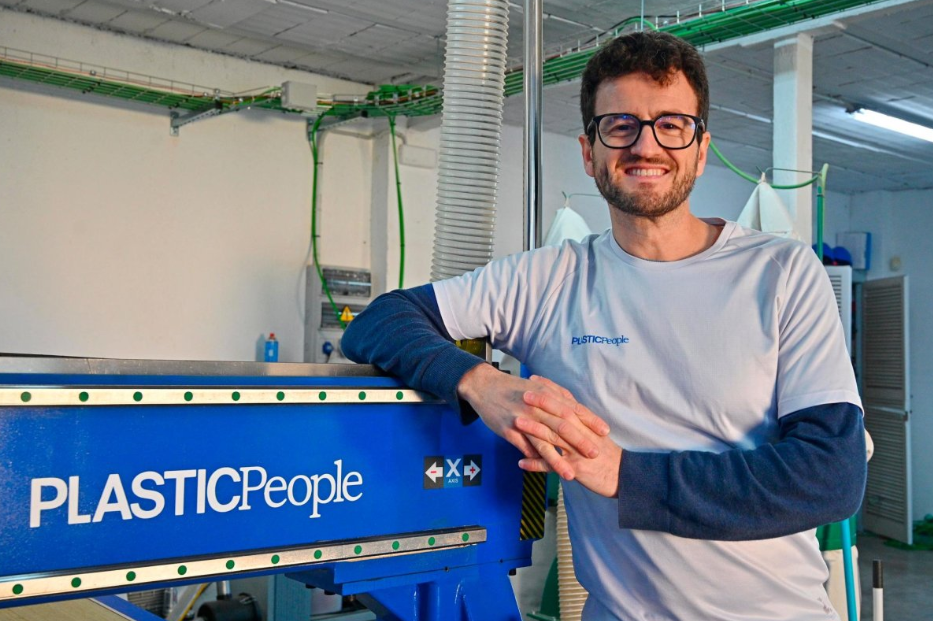
My name is Néstor Catalán, and I am one of the founders of PLASTICPeople. I currently serve as CEO of PLASTICPeople Spain, leading the development of the project at both the strategic and operational levels.
As is often the case in an early-stage startup, my role involves being actively engaged across all areas of the company, from production and operations to business development and strategic partnerships.

- Brief description of the company and its activities
PLASTICPeople was founded in Vietnam in 2019 with a clear mission: to provide a creative, participatory, circular, and sustainable solution to the global plastic waste challenge.
The company was founded by Néstor Catalán and Nano Morante.
With the goal of replicating the PLASTICPeople model in Europe and demonstrating its viability within a more demanding European regulatory environment, Néstor Catalán returned to Reus in 2023 and established PLASTICPeople Spain S.L.
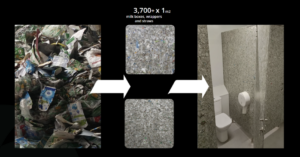
PLASTICPeople’s materials are made from 100% plastic waste, primarily post-consumer plastic, with a particular focus on hard-to-recycle waste streams that would otherwise end up in landfills or incineration facilities, such as multi-material plastics, films, and mixed plastics. The result is a range of locally sourced materials that are both 100% recycled and recyclable.
The company transforms all types of plastic waste into versatile, safe, and design-driven materials, mainly producing 100% recycled plastic panels in standard industrial sizes (2.4 × 1.2 meters) and various thicknesses.
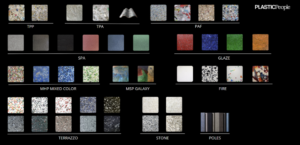
PLASTICPeople offers a standard catalogue of materials that, despite being made entirely from plastic waste, consistently deliver reliable mechanical, structural, and aesthetic properties thanks to the company’s unique sorting, formulation, and transformation processes.
- Current challenges and needs
PLASTICPeople continues to work on addressing the challenge of transforming hard-to-recycle plastic waste into viable, competitive, and scalable industrial materials.
We already have a validated technology and process, with a production facility operating in Tarragona. Our current focus is on consolidating the industrial process, developing the market for recycled materials, and generating the traction needed to demonstrate the economic viability of the model.
The project also aims to position these new materials as a genuine alternative to conventional materials, building market confidence and facilitating their adoption across a range of sectors, including construction, furniture, architecture and interior design, and industrial product design.
At the same time, we are working to optimize the production model and increase its scalability, with the goal of significantly expanding our waste transformation capacity and maximizing the project’s environmental and economic impact.
- Motivation for joining the cluster and the type of synergies sought
The motivation behind founding PLASTICPeople stems from the need to address one of today’s major environmental challenges: plastic waste. It was—and still is—time to move beyond talking about the problem and start taking action.
We believe that the global challenge of plastic waste can and should be transformed into a real industrial opportunity.
The initial experience in Vietnam, a context characterized by large volumes of waste and limited collection and recycling systems, allowed us to validate our model for transforming plastic waste into new materials and demonstrate its viability.
Replicating the model in Catalonia is intended to prove its scalability and viability within a more structured industrial and regulatory environment, while also providing access to European markets.
The project is built on a highly collaborative approach, which is why we are seeking synergies with different stakeholders across the ecosystem: industrial companies that can integrate recycled materials into their products, waste suppliers and waste management companies that can ensure a stable supply of raw materials, and technology and creative centers that can contribute to the continuous improvement of our materials and the exploration of new applications.
These collaborations are essential for scaling the model and maximizing its environmental and economic impact.
Thank you for being part of CREC!
