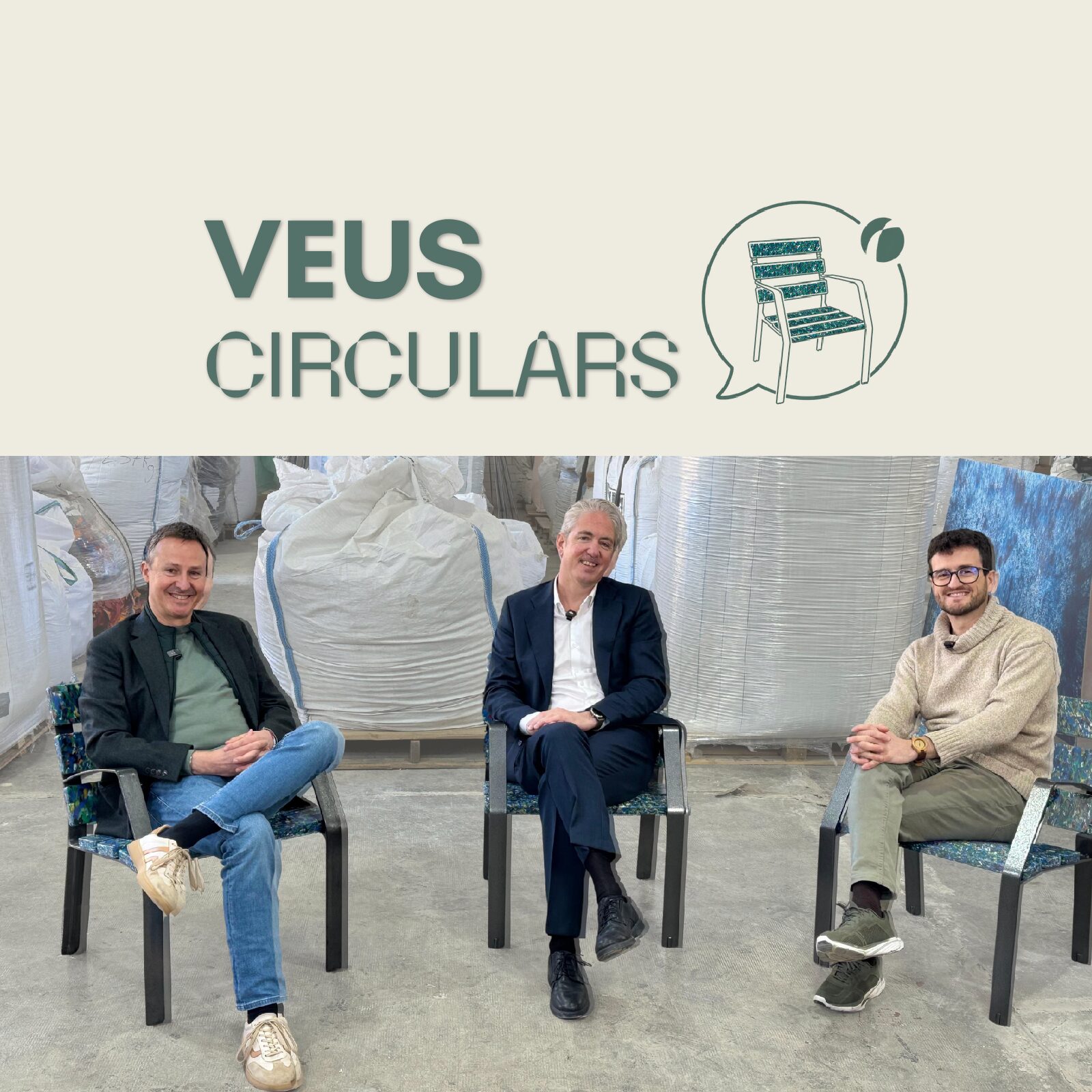
When does construction waste stop being waste and become a new resource? This is the question explored in the second episode of Veus Circulars, the audiovisual series promoted by the Waste Cluster of Catalonia (CREC) to showcase real-life projects that drive the circular economy through collaboration between the different actors across the value chain.
In this episode, Grup Calaf, CGM Centre de Gestió Mediambiental and Plastic People share their experience in a project that demonstrates that circular construction begins long before waste reaches a treatment facility. The key lies in the proper separation of materials at the very moment they are generated on site, ensuring their quality, traceability and potential for recovery.
Throughout the conversation, the participants explain how the introduction of the Waste Manager role has helped improve waste flow management by ensuring efficient source separation and enabling materials to retain their value throughout the entire process. This coordination between the construction company, the waste manager and the manufacturing industry makes it possible to move towards a more efficient and sustainable model.
Thanks to this working model, plastic waste generated by construction activities can be recovered, transformed into new raw material and turned into new recycled formwork panels, which are then reintroduced into the construction sector. This is a practical example of how the material loop can be closed while reducing the consumption of virgin resources through collaboration between all the stakeholders involved.
This project demonstrates that circular construction is not only about managing waste correctly, but also about rethinking processes from the very beginning to preserve the value of materials, encourage their reuse and promote new, more circular production models.
From CREC, we would like to thank Grup Calaf, CGM Centre de Gestió Mediambiental and Plastic People, as well as all the professionals who took part in this project, for their commitment and willingness to share an initiative that demonstrates how collaboration is a fundamental driver in advancing towards a more sustainable and circular construction sector.