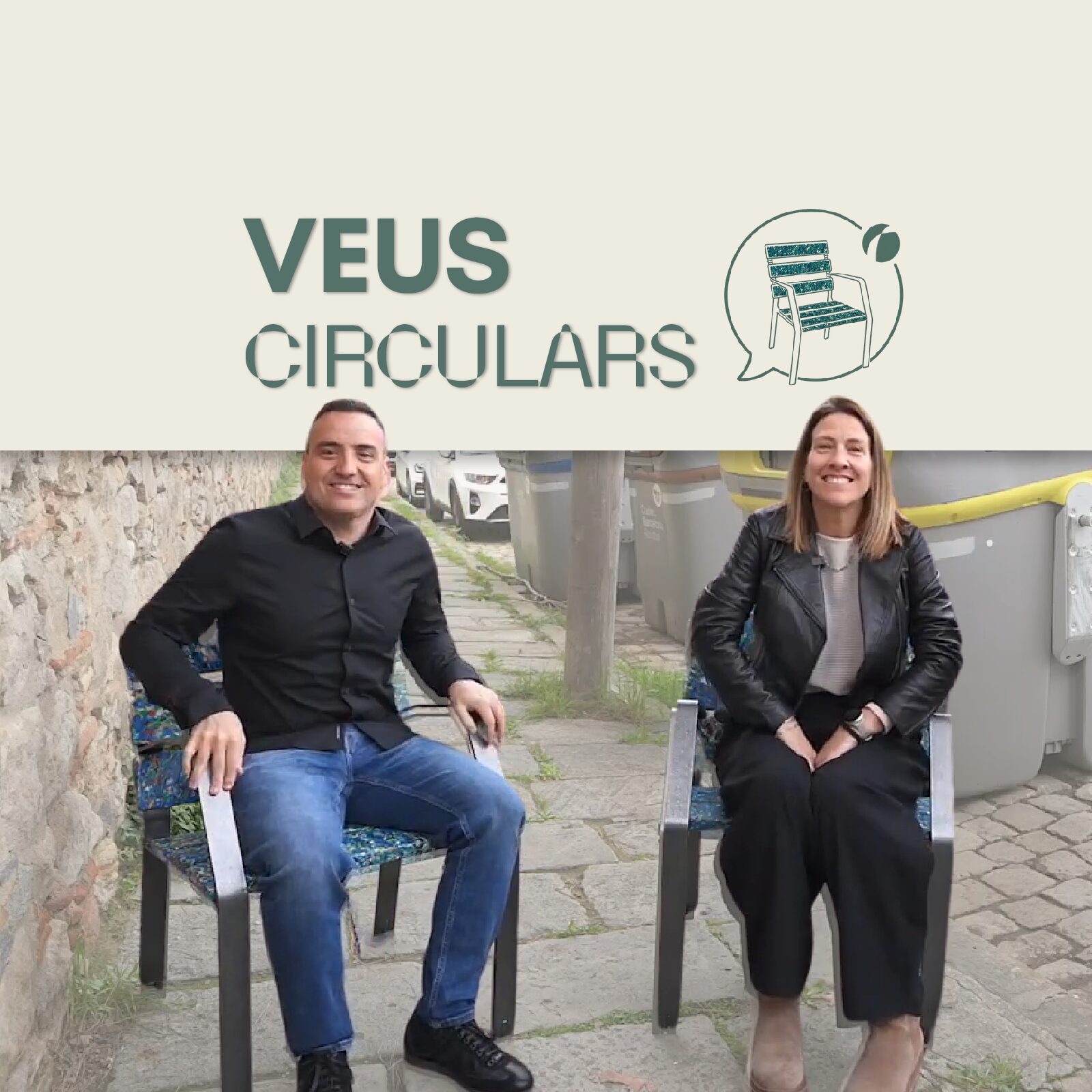
Can a city’s need become an opportunity to drive the circular economy? This is the starting point of the first episode of Veus Circulars, the audiovisual series promoted by the Waste Cluster of Catalonia (CREC) to showcase real-life projects that demonstrate how collaboration between the different actors across the value chain is key to accelerating the transition towards a more circular model.
This first episode focuses on the renewal of Barcelona’s urban waste containers, a routine process that, thanks to the involvement of the Barcelona City Council, ROS ROCA, S.A. and TIRGI, has become an opportunity to keep materials in circulation and reduce the consumption of natural resources.
Throughout the conversation, the participants explain how a strategic public procurement initiative has made it possible to incorporate circular economy principles into the renewal of the city’s waste container fleet. The project highlights the importance of considering a product’s end of life from the very moment tenders are designed and the first decisions are made, enabling the recovery of materials and their reincorporation into the manufacturing of new waste containers.
The collaboration between the public administration, the manufacturer and the waste management company has been essential in developing a model that makes it possible to recover and recycle end-of-life waste containers, transforming them into raw material for the production of new ones. This approach reduces the need for virgin raw materials, extends the life cycle of materials and generates positive environmental and industrial impacts.
This project demonstrates that circularity does not depend solely on recycling, but on the ability of all stakeholders involved to work together, share knowledge and make joint decisions that preserve the value of resources for as long as possible.
Through this first episode, Veus Circulars shows that public procurement can become a strategic tool for driving innovation and fostering new models of collaboration that contribute to building more sustainable and resilient cities.
From CREC, we would like to thank the Barcelona City Council, ROS ROCA, S.A. and TIRGI for their participation and their willingness to share this success story, which demonstrates how collaboration between public administration, industry and waste management is key to making the circular economy a reality.